Conference Session Tracks

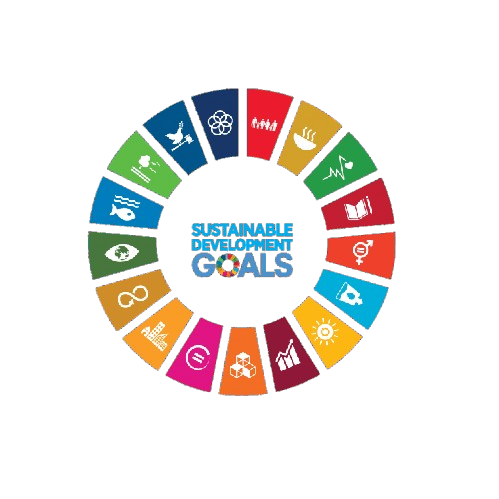
SDG 1
No Poverty
SDG 9
Industry, Innovation and Infrastructure
SDG 11
Sustainable Cities and Communities

SDG 12
Responsible Consumption and Production

SDG 13
Climate Action

SDG 16
Peace, Justice and Strong Institutions
SDG 17
Partnerships for the Goals
Track 01
Innovative Approaches to Infrastructure Resilience
This track focuses on cutting-edge methodologies and technologies that enhance the resilience of infrastructure systems. Participants will explore case studies and theoretical frameworks that contribute to the development of robust infrastructure capable of withstanding disasters.
Track 02
Disaster Risk Assessment and Management
This session will delve into advanced techniques for assessing disaster risks and implementing effective management strategies. Emphasis will be placed on quantitative and qualitative approaches that inform decision-making in disaster-prone areas.
Track 03
Urban Planning for Resilient Communities
This track examines the role of urban planning in fostering community resilience against disasters. Discussions will include land use planning, zoning regulations, and the integration of green infrastructure to mitigate risks.
Track 04
Structural Safety in the Face of Disasters
This session addresses the critical aspects of structural safety in disaster scenarios, focusing on engineering solutions that enhance building performance. Participants will share insights on design principles and materials that contribute to disaster-resistant structures.
Track 05
Critical Infrastructure and Emergency Response
This track highlights the importance of critical infrastructure in emergency response frameworks. Presentations will cover the interdependencies between various infrastructure systems and their roles in effective disaster response.
Track 06
Policy Development for Disaster Preparedness
This session will explore the formulation of policies that enhance disaster preparedness at local, national, and international levels. Participants will discuss best practices and innovative policy frameworks that promote resilience.
Track 07
Community Resilience and Social Capital
This track investigates the role of social capital in building community resilience to disasters. Discussions will focus on community engagement, local networks, and the importance of social cohesion in recovery efforts.
Track 08
Mitigation Strategies for Disaster Risk Reduction
This session will examine various mitigation strategies aimed at reducing disaster risks across different sectors. Participants will share successful case studies and lessons learned from implementing these strategies in diverse contexts.
Track 09
Engineering Solutions for Sustainable Infrastructure
This track focuses on engineering innovations that promote sustainability in infrastructure development. Discussions will include sustainable materials, energy-efficient designs, and the integration of resilience principles in engineering practices.
Track 10
Technological Advances in Disaster Management
This session will showcase the latest technological advancements that enhance disaster management capabilities. Topics will include the use of big data, remote sensing, and artificial intelligence in improving disaster response and recovery.
Track 11
Interdisciplinary Approaches to Disaster Risk Reduction
This track emphasizes the importance of interdisciplinary collaboration in addressing disaster risks. Participants will explore how integrating diverse fields such as engineering, social sciences, and environmental studies can lead to more effective disaster risk reduction strategies.

 Home
Home